
The “Rolex Fat Lady” refers to the GMT-Master II reference 16760, produced between approximately 1983 and 1988. It earned this nickname because of its thicker case profile compared to its predecessors, the GMT-Master 1675 and 16750. This increased thickness was necessary to accommodate a new movement, the Caliber 3085.Here’s a breakdown of the Fat Lady’s key features and history:
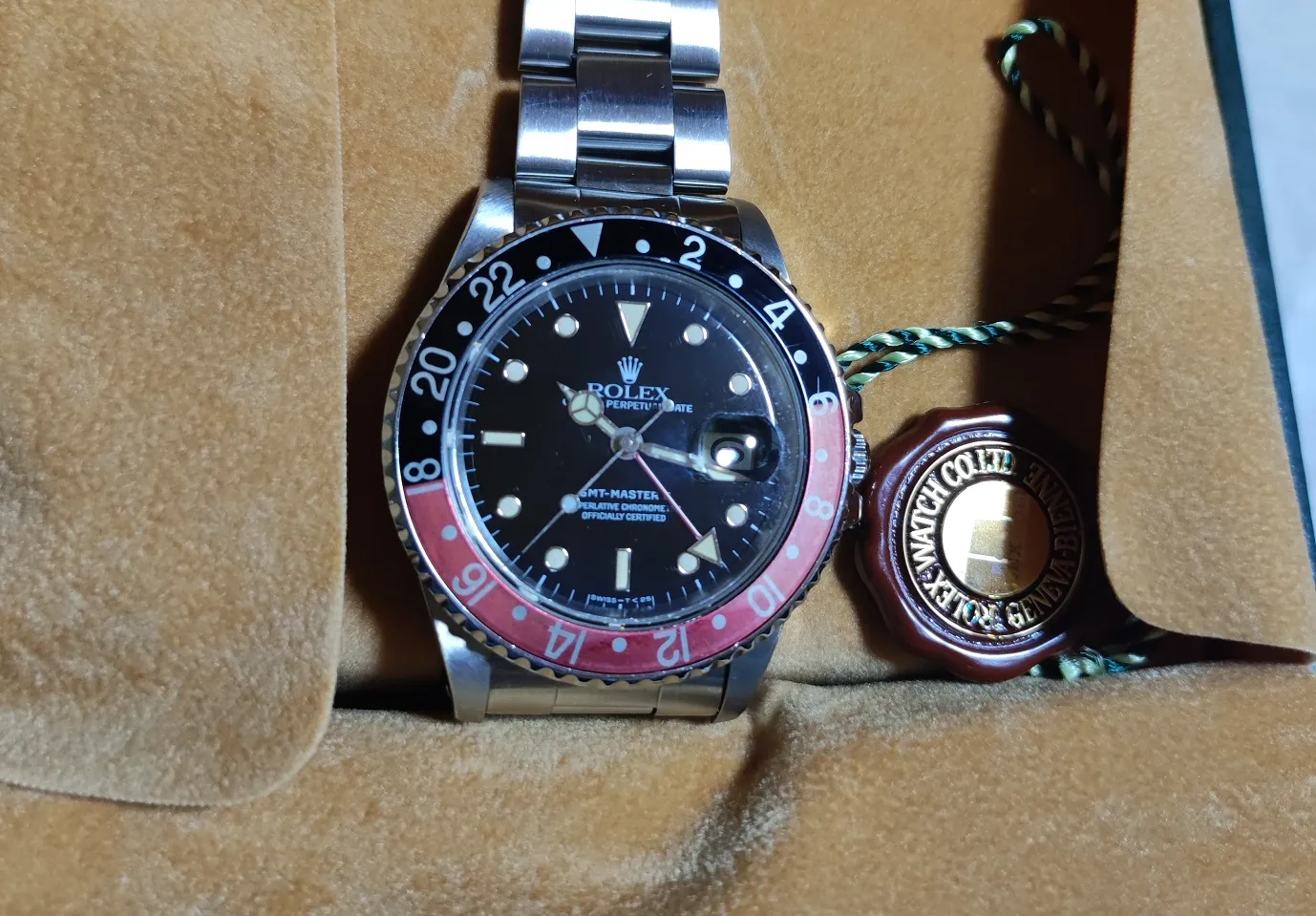
Key Features:
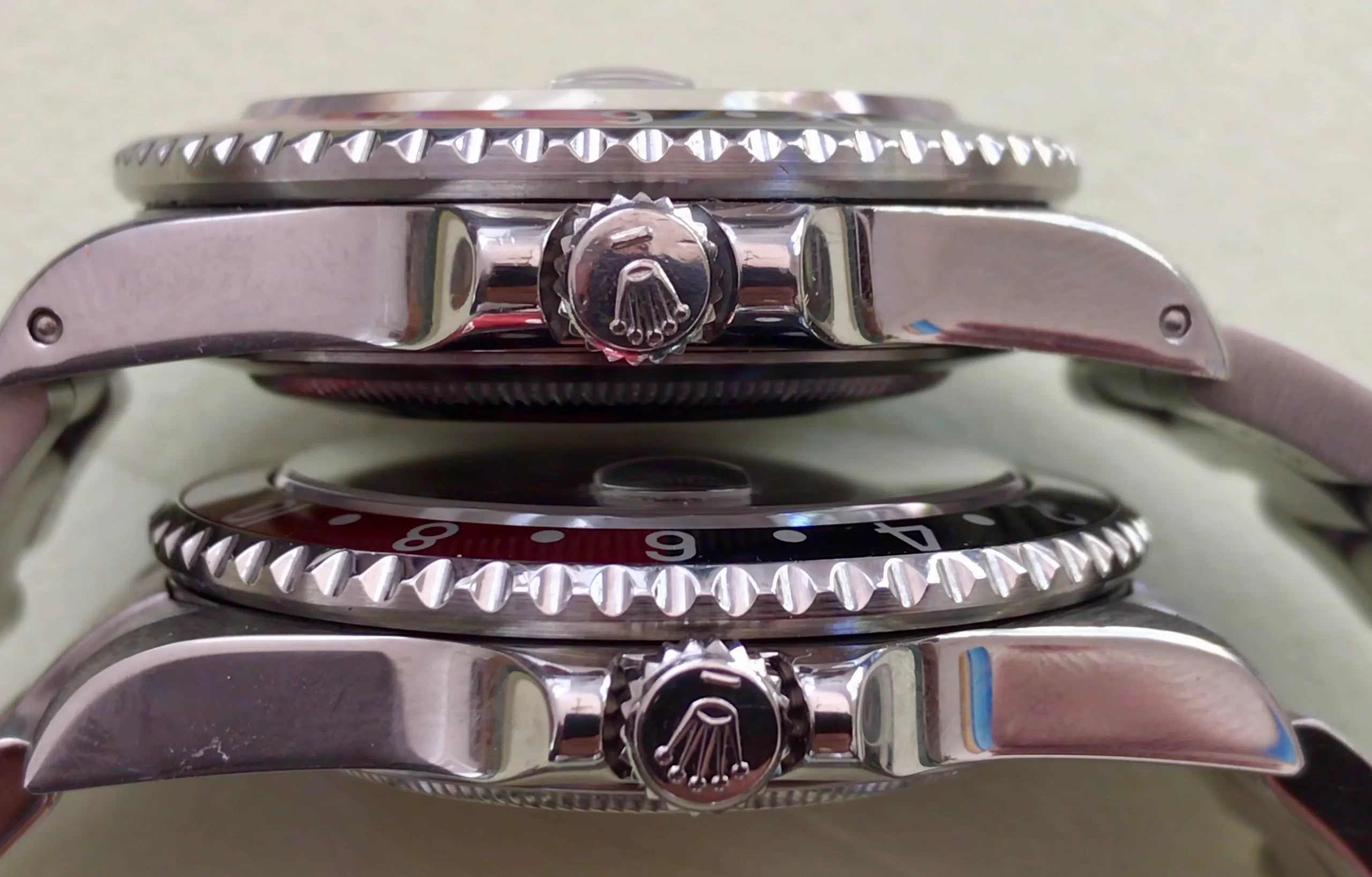
- Thicker Case: The most obvious characteristic, giving it the “Fat Lady” moniker.
- Caliber 3085: This new movement introduced a significant advancement: the ability to independently adjust the hour hand. This “quickset” function made it much easier to set a second time zone without affecting the minute or GMT hand.
- Sapphire Crystal: The Fat Lady was the first GMT-Master to feature a scratch-resistant sapphire crystal, replacing the acrylic crystals used in previous models.
- “Coke” Bezel: This model was the first to sport the now-iconic black and red bezel, nicknamed the “Coke” bezel by collectors.
Why is it called the “Fat Lady”?
The nickname stems from the watch’s thicker case profile, especially when compared to the more slender GMT-Master models that came before it. The thicker case was necessary to house the new Caliber 3085 movement, which was larger than the previous Caliber 3075.
Historical Significance:
The GMT-Master II 16760 marked a significant evolution in the GMT-Master line. The introduction of the Caliber 3085 with its independent hour hand adjustment was a major advancement for travelers, and the addition of the sapphire crystal enhanced the watch’s durability. Furthermore, the “Coke” bezel introduced with this model went on to become one of the most recognizable and sought-after GMT-Master II configurations.
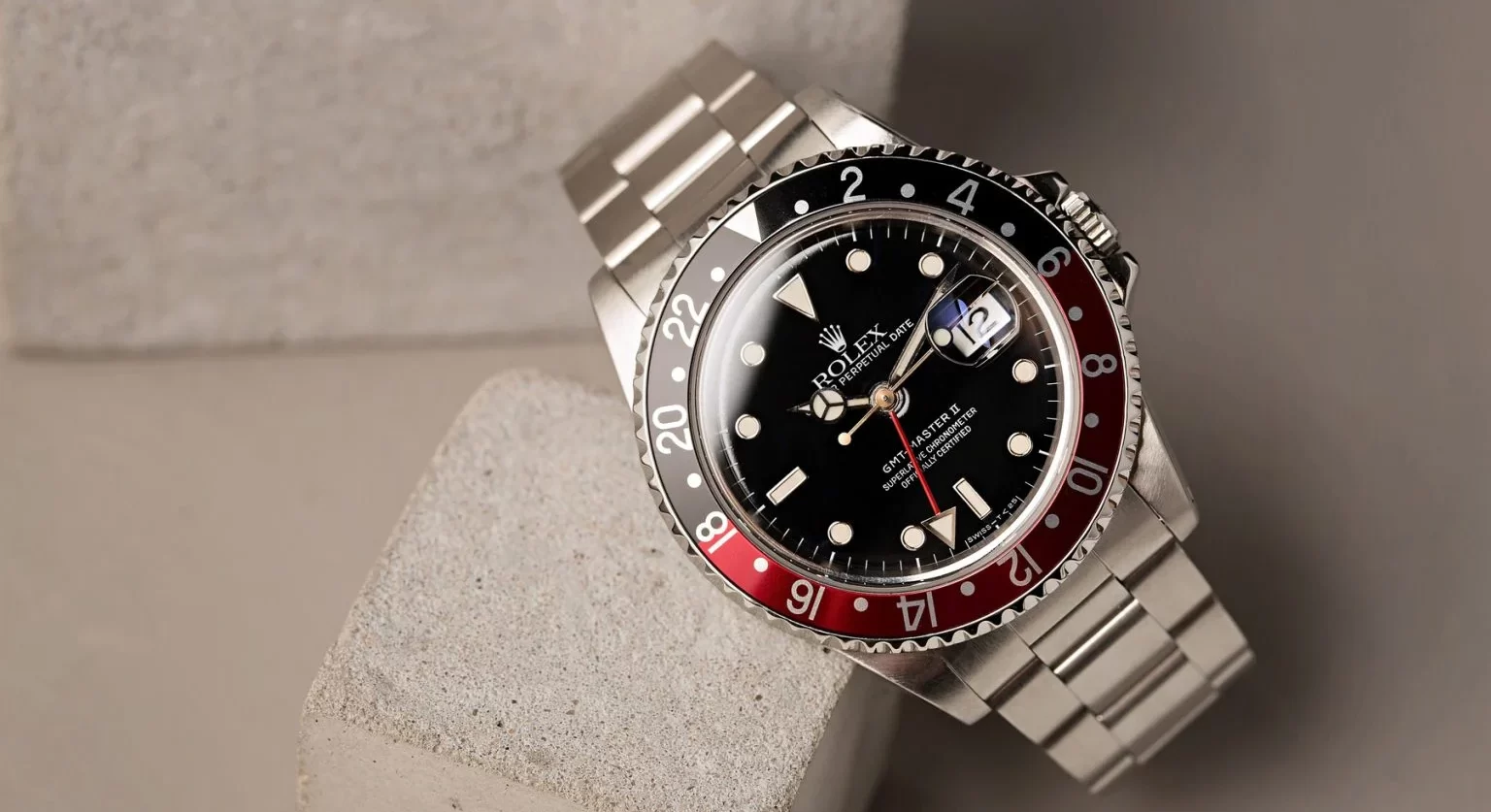
Despite its relatively short production run, the “Fat Lady” remains a popular and collectible vintage Rolex, appreciated for its unique features, historical significance, and robust build.